
| Our Publications | ||
| Books by Title | ||
| Books by Author | ||
| Books by Country | ||
| E-books | ||
| About | ||
| Orchid Press E-books | ||
| Distributed E-books | ||
| Our Bookshop | ||
| About Us | ||
| Browse Shop | ||
| How to Buy | ||
| Contact Us | ||
| WE BUY BOOKS AND LIBRARIES | ||
|
||
Central Asian Studies
Central Asian Studies continues a series of scholarly books on Central Asia and the Himalayas started in the early 1970s by a British publisher. The series comprises some re-issues of the previous books, as well as new titles.NOTE: Limited availability of some of the older titles.
| Archaeology | Architecture | Art |
| Bibliography | Languages | Religion |
Anthropology
 | The Badi of West Nepal Prostitution as a Social Norm Among an Untouchable Caste by Thomas Cox 2nd edition 2006, 50 pp., table of Badi argot, appendix on Badi religion and origin myths, bibliography, Softcover, 21.5 x 15 cm. ISBN 988-97764-6-4 ISBN 978-988-97764-6-6 This pioneering monograph on the anthropology of the Badi, an untouchable caste in West Nepal whose livelihood depends on the proceeds of prostitution, served to raise awareness of the risks of their way of life, and to facilitate empowerment of new leaders within their communities. While the initial focus of aid organizations was on prevention of the spread of the HIV virus, the ensuing resources, training and encouragement provided by these various agencies have changed the Badi’s culture of fatalism and have facilitated the development of effective new Badi women leaders. It is hoped that the republication of this study will continue to spread awareness about the Badi and to stimulate further activities which protect the Badis’ basic rights of self-determination and freedom from persecution. |
 |
The Cultural History of Tibet by David L. Snellgrove & Hugh E. Richardson 3rd edition 2004. 320 pp., 121 b&w photos, 2 maps, biblio, index, 24.5 x 17.5 cm., softcover. ISBN-10: 974-524-033-8 ISBN-13: 978-974-524-033-9 Remains one of the very best surveys of the Tibetans, their religion and rich, complex culture, with continuing relevance today, as we witness the ongoing destruction of this culture at the hands of the occupying Chinese population. In Snellgrove’s words, the book serves to ‘keep in public view the clear historical right of the Tibetan people to self-determination’. With a new preface, and obituary describing the life and career of Hugh Richardson (1905-2000), by co-author David Snellgrove. |
 |
Peasants and Workers in Nepal by D. Seddon, P. Blakie and J. Cameron 1979. 232 pp., 21 x 14 cm., softbound. ISBN-10: 974-8304-50-7 ISBN-13: 978-974-8304-50-2 Nine essays based on fieldwork in the mid 1970’s analyse the economic and social conditions in the towns and countryside of one region of Nepal, with particular reference to peasants, workers and the petty bourgeoisie. Chapters on the changing circumstances of workers and peasants, minor beaurocrats and small businessmen all acknowledge the complexity of Nepalese society and economy, and the need for a correspondingly sophisticated approach. “Presents an alternative perspective on Nepalese society that has been sadly lacking…promises to open new avenues of analysis for other researchers.” |
 |
Princely States of India: A Guide to Chronology and Rulers by David Henige 2004. 230 pp., one colour plate, index, 21.5 x 15 cm., hardcover. ISBN-10: 974-524-049-4 ISBN-13: 978-974-524-049-0 In both magnitude and length of time the Princely States of India represented both the paradigm for, and acme of, the British imperial policy of Indirect Rule, whereunder the ’traditional’ ruling classes were expected to assume the burden of administration. By Independence in 1947 the Government of India recognized nearly 600 entities varying from the size of the United Kingdom, to several that consisted of a single village within less than a square mile. In providing a carefully assembled chronology of the leaders of the 290 most significant of these states, the author makes available a new and valuable tool for all scholars of South Asia, as well as Sikkim and the Himalayan kingdom of Bhutan, in the colonial period. |
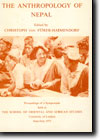 |
Contributions to the Anthropology of Nepal by Christoph von Führer-Haimendorf (ed.) 1977. 205 pp., 21 X 15 cm., hardbound. ISBN-10: 974-8304-49-3 ISBN-13: 978-974-8304-49-6 Fifteen papers (11 in English, 4 in French) presented at a SOAS symposium, June 1973, by leading scholars in various disciplines of Himalayan studies; includes ‘The Ritual Journey’ by Nicholas Allen, ‘Monkhood versus Priesthood in Newar Buddhism’ by Stephen Greenwold, ‘A Shaman’s Song’ by John Hitchcock, ‘A Note on Possession in South Asia’ by Andras Hofer, ‘The Divinities of the Karnali Basin in Western Nepal’ by Prayag Raj Sharma. “The greatest virtue of this volume is its emphasis on the urgency of enlarging the store of ethnography from this fascinating country”. (Journal of Asian Studies) |
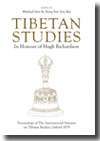 |
Tibetan Studies in Honour of Hugh Richardson: Proceedings of the International Seminar on Tibetan Studies, Oxford 1979. Edited by Michael Aris & Aung San Suu Kyi 2012 (1980), 372 pp., 9 b & w photos, 49 line drawings and sketches, extensive notes, Tibetan and Western bibliographical references, 24 x 17 cm., softcover. ISBN-13: 978-974-524-145-9 Orchid Press is pleased to make available for the wide community with interest in Tibetan culture a reprint edition of this seminal conference, featuring papers by some 47 eminent Tibetologists, first presented at the International Seminar on Tibetan Studies in Oxford in 1979. Dedicated to one of the most highly respected of these scholars, Hugh Richardson, the quality and diversity of the papers herein, reflecting as they do the very significant contribution to this field of Richardson himself, are a fitting tribute to the man. Commencing with an essay in appreciation of Richardson’s life and myriad achievements, and followed by a complete bibliography of his writings, the papers then presented span the full range of disciplines that have focused on this rich and endangered culture. Included in this list are important contributions to the history, geography, religion, philosophy, arts, sociology, ethnography, folklore, language and literature, medicine and commerce of Tibet and the Tibetan diaspora. Many of the papers remain standard references in their respective fields, and copies of the original publication of these Proceedings are now long out of print and very difficult to obtain. It is thus hoped that this reprint edition will serve as a valuable reference for new and current scholars in the field of Tibetan studies, both in terms of the scholarly material presented and as an inspirational example of the quality of work of those who preceded them. “It is difficult to think of any aspect of Tibetan culture which is not, to some extent at least, touched upon.”Review by K.R. Norman, Modern Asian Studies, Vol. 16-1, 1982. THIS TITLE IS AVAILABLE ONLY DIRECTLY FROM ORCHID PRESS
|
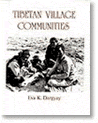 |
Tibetan Village Communities Structure and Change by Eva Dargay 1982. 120 pp., 7 plates, maps and plans, 23 x 17 cm., softbound. ISBN-10: 974-8304-51-5 $33.00 ISBN-13: 978-974-8304-51-9 “…authoritatively detailed picture of Tibetan economy and society ‘at the grass roots’ as it was before 1959.” |
PO Box 70, Trinity TB, NL, A0C 2S0, Canada
Telephone: +1 709-330-4703